Package Overview
6 Days Marangu Route Kilimanjaro Trek | Coca-Cola Route with Hut Accommodation
The Marangu Route — affectionately called the "Coca-Cola Route" — is the oldest, most established, and most affordable trail to the summit of Mount Kilimanjaro. It is the only route on the mountain that offers hut accommodation instead of camping, making it the most comfortable option for trekkers who prefer not to sleep in tents.
Unlike the more rugged western routes, Marangu approaches Kilimanjaro from the southeast and follows a gradual, well-maintained trail through rainforest, moorland, and alpine desert. Because it is the shortest route (6 days), it is also the most affordable — but it comes with a trade-off: a faster ascent means less time for acclimatization, so the summit success rate is lower than on longer routes like Lemosho or Northern Circuit.
Our 6-Day Marangu Route with Winter Trails Tours and Safaris is designed to maximise your chances of reaching Uhuru Peak (5,895m) — Africa's highest point — while keeping you comfortable in Mandara, Horombo, and Kibo Huts along the way.
A Route Steeped in History
The Marangu Route is not just a trail — it is a piece of mountaineering history. It was the first route ever established on Kilimanjaro, opened in the late 19th century when German explorers and missionaries began mapping the mountain. In 1889, Hans Meyer and Ludwig Purtscheller became the first Europeans to reach the summit via this very approach. For decades, Marangu was the only way up Kilimanjaro, and it remains the most iconic.
Its nickname — the "Coca-Cola Route" — dates back to the 1970s and 1980s, when trekkers could buy bottled Coca-Cola and other soft drinks at the huts along the way. While that novelty has faded, the name stuck, and today it evokes a sense of nostalgia and ease: this is the route where you can climb Africa's highest peak with a hot meal, a solid roof over your head, and a bed to sleep in each night.
The Landscape: Five Worlds in Six Days
Few treks in the world take you through so many distinct ecosystems in such a short time. The Marangu Route crosses five ecological zones, each with its own climate, vegetation, and wildlife:
1. Cultivated Zone (800m – 1,800m) — The trek begins in the fertile farmlands around Marangu village, where Chagga farmers grow bananas, coffee, and maize on the lower slopes.
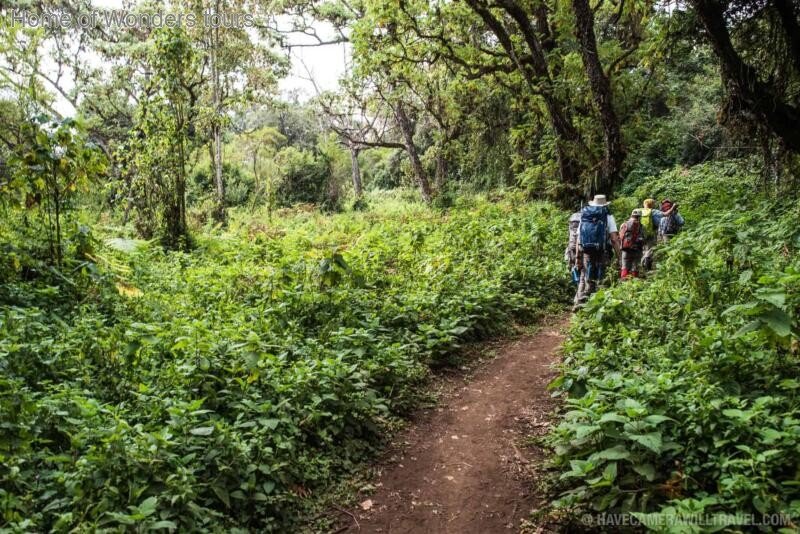
2. Montane Rainforest (1,800m – 2,800m) — A lush, humid forest of giant fig trees, camphor, and juniper. This is the realm of colobus monkeys, blue monkeys, bushbucks, and turacos. The air is thick with birdsong and the scent of damp earth.
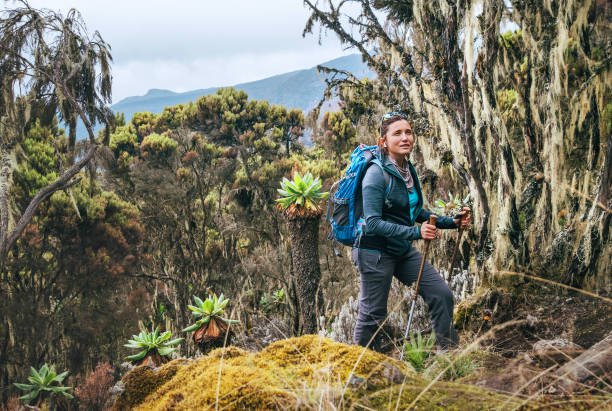
3. Moorland and Heath (2,800m – 4,000m) — The forest gives way to open moorland dotted with giant heather, lobelias, and groundsel — strange, prehistoric-looking plants that thrive in the thinner air. Views stretch toward Mawenzi and Kibo.
4. Alpine Desert (4,000m – 5,000m) — A stark, barren landscape of rock, scree, and volcanic dust. Temperatures swing dramatically between blistering days and freezing nights. Very little survives here, yet the views are extraordinary.
5. Arctic Summit Zone (5,000m – 5,895m) — The final push to Uhuru Peak takes you above the clouds into a world of ice, snow, and glaciers — a landscape that feels more like the Arctic than the tropics.
What Makes the Marangu Route Different
Unlike the Machame, Lemosho, or Northern Circuit routes — where you sleep in tents and eat in mess tents — the Marangu Route provides solid A-frame huts at every camp. Mandara and Horombo Huts have dormitory-style bunk rooms, foam mattresses, communal dining halls, and even basic shops selling snacks and drinks. Kibo Hut is more basic — a stone building with shared dormitories and a single dining room — but it still offers a warm, sheltered place to rest before the summit push.
This makes Marangu the ideal choice for trekkers who want to avoid camping — whether because of age, comfort preference, or first-time mountain experience. You still need a sleeping bag, but you do not need a tent, sleeping mat, stove, or cooking equipment.
Who Is the Marangu Route For?
- First-time trekkers who want a straightforward, well-marked trail
- Budget-conscious climbers looking for the most affordable Kilimanjaro route
- Trekkers who dislike camping and prefer a solid roof each night
- Travellers short on time — the 6-day itinerary fits neatly into a longer East African trip
- Solo trekkers — the shared huts make it easy to meet other climbers
- Groups and friends looking for a classic Kilimanjaro experience
The Trade-Off: Comfort vs. Acclimatization
Every route has a trade-off, and on Marangu it is altitude. The 6-day itinerary is short compared to the 7–9 day routes, which means less time for your body to adapt to the thinning air. The result is a summit success rate of around 65–70% — lower than Lemosho, Northern Circuit, or Machame.
That said, the 6-day version (which includes an acclimatization day at Horombo Hut) is significantly better than the 5-day version. With proper pacing, hydration, and medication if recommended by your doctor, many trekkers reach Uhuru Peak successfully. Our guides are trained to monitor your health daily and will adjust the pace to give you the best possible chance.

Itinerary
Day 1 — Marangu Gate to Mandara Hut
Elevation: 1,879m → 2,720m
Hiking Time: 4–5 hours
Distance: ~8 km
Habitat: Montane rainforest
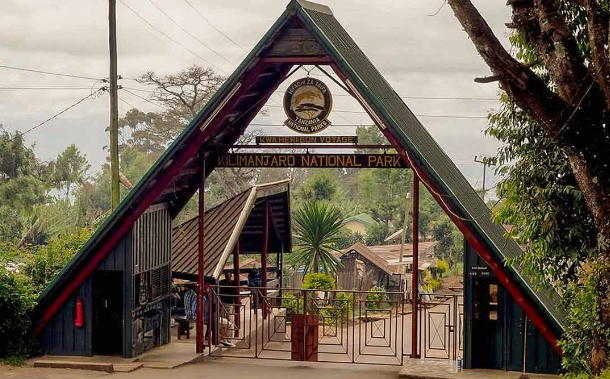
Your trek begins early in the morning with a transfer from your hotel in Moshi or Arusha to Marangu Gate — the starting point of the route. After registration and a briefing with your guide, you'll begin your ascent through lush montane rainforest.
The trail is gentle and shaded, passing beneath ancient trees draped in moss and lichen. Listen for the calls of colobus monkeys and watch for colourful turacos and hornbills. Stop for a packed lunch at a clearing halfway up.
You'll arrive at Mandara Hut (2,720m) in the mid-afternoon. After settling into your dormitory, take a short optional walk to the nearby Maundi Crater for your first views of the Kenyan plains below. Dinner and overnight at Mandara Hut.
Day 2 — Mandara Hut to Horombo Hut
Elevation: 2,720m → 3,720m
Hiking Time: 6–8 hours
Distance: ~12 km
Habitat: Moorland and heath
After breakfast, you'll leave the rainforest behind and enter the moorland zone — a landscape of giant heather, lobelias, and proteas. The trail climbs steadily through open terrain, with increasingly dramatic views of Mawenzi Peak and the Kibo massif ahead.
Stop for lunch at a scenic point, then continue toward Horombo Hut (3,720m). The hut is larger than Mandara and offers panoramic views of both Mawenzi and Kibo — the two highest peaks of Kilimanjaro.
You'll arrive at Horombo in the late afternoon. This is an important acclimatization night, so take it slow, hydrate well, and rest. Dinner and overnight at Horombo Hut.
Day 3 — Acclimatization Day at Horombo Hut
Elevation: 3,720m → 4,200m (optional acclimatization hike) → 3,720m
Hiking Time: 3–4 hours (optional)
Distance: ~6 km
Habitat: Moorland
This is your acclimatization day — a crucial part of the trek that significantly improves your chances of reaching the summit. After breakfast, you'll take an optional hike to Zebra Rocks (4,200m) — a distinctive rock formation with panoramic views of the Saddle and the Kibo massif.
The goal is to gain altitude and return to sleep at Horombo, which helps your body adapt to the thinner air. Spend the afternoon resting, hydrating, and preparing for the summit push.
Dinner and overnight at Horombo Hut.
(Note: The 6-day itinerary includes this acclimatization day as an optional hike. Some operators run the 5-day version without it — but we strongly recommend the 6-day for better acclimatization and higher summit success.)
Day 4 — Horombo Hut to Kibo Hut
Elevation: 3,720m → 4,703m
Hiking Time: 6–7 hours
Distance: ~10 km
Habitat: Alpine desert
After breakfast, you'll leave Horombo and cross the Saddle — a vast, barren plain between Mawenzi and Kibo that resembles a lunar landscape. The trail is exposed to sun and wind, so pace yourself and drink plenty of water.
You'll pass the "Last Water Point" — the final place to collect water before the summit — and continue to Kibo Hut (4,703m). This is the highest hut on the route and the base camp for your summit attempt.
Arrive at Kibo in the mid-afternoon. Eat an early dinner (around 5:00–6:00 PM) and rest. You'll be woken around 11:00 PM to begin the final ascent to the summit.
Dinner and overnight at Kibo Hut.
Day 5 — Kibo Hut to Uhuru Peak to Horombo Hut
Elevation: 4,703m → 5,895m → 3,720m
Hiking Time: 10–14 hours
Distance: ~20 km
Habitat: Arctic summit and alpine desert
This is the most demanding day of the trek. You'll be woken around 11:00 PM for tea and biscuits, then begin the ascent in the darkness. The trail is steep and switchbacks up scree and rock — the toughest part of the route.
After about 5–6 hours of climbing, you'll reach Gilman's Point (5,681m) on the crater rim — the moment you officially reach the summit. From there, it's a further 1.5–2 hours along the crater rim to Uhuru Peak (5,895m) — the highest point in Africa.
You'll witness a spectacular sunrise over the crater and the plains below. Take photos, celebrate, and sign the summit log. After a short rest, begin the descent.
You'll return to Kibo Hut for lunch, then continue down to Horombo Hut (3,720m) for dinner and overnight. This is a long, exhausting day, but the memory of standing on Uhuru Peak will stay with you forever.
Day 6 — Horombo Hut to Marangu Gate
Elevation: 3,720m → 1,879m
Hiking Time: 5–6 hours
Distance: ~18 km
Habitat: Moorland and rainforest
After breakfast, continue your descent through moorland and back into the lush rainforest. The trail is gentle, and the warmer air and thicker oxygen make this a pleasant final day.
You'll arrive at Marangu Gate in the early afternoon, where you'll receive your summit certificate — a proud momento of your achievement. Your vehicle will transfer you back to your hotel in Moshi or Arusha.
Celebration dinner and overnight at your hotel (optional add-on).
Included services in itinerary
- Meals (Breakfast, Lunch and Dinner) Included in itinerary
- Camping Experience
- Entrance Fees Included
- Hiking / Trekking
- Professional English-speaking safari guides
Excluded
- Swimming / Beach Access
- Tips and Gratuities not included
Trip Information
PDF format with full itinerary
Request this tour
More Related Packages
6 Days Umbwe Route — Kilimanjaro
6 Days Kilimanjaro Climbing via Rongai Route
7 Days Lemosho Route Kilimanjaro Trek
8 Days Rongai Route Kilimanjaro Trek