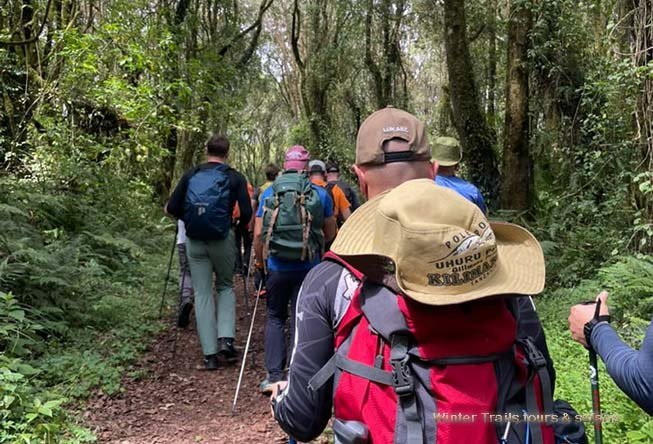
The Marangu Route is the oldest, most established, and most popular route on Mount Kilimanjaro. It's the only route that offers hut accommodation instead of tents, making it a favourite among climbers who prefer a bit more comfort. But it's also known for having the lowest summit success rate of all the main routes — not because it's harder, but because most people attempt it in just 5 days, which doesn't allow enough time to acclimatise.
In this blog, we'll cover everything you need to know about the Marangu Route: its history, features, pros and cons, and who it's best for.
What Is the Marangu Route?
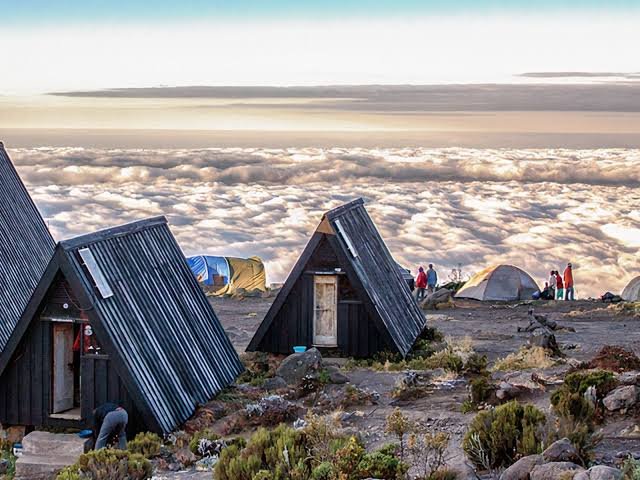
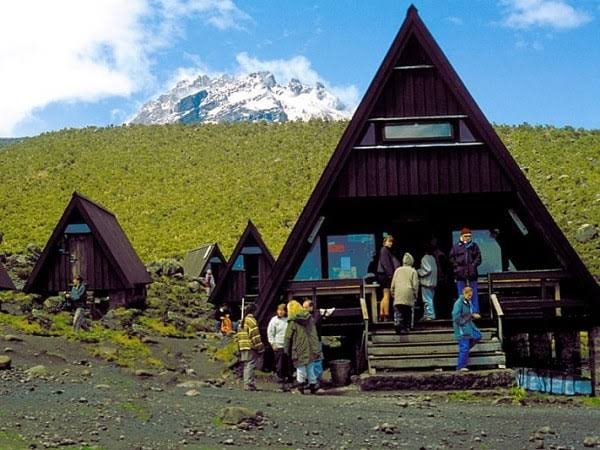
The Marangu Route approaches Kilimanjaro from the southeast, starting at Marangu Gate near the town of Moshi. It's the only route that uses dormitory-style huts with bunk beds and mattresses, rather than tents. This makes it a popular choice for those who don't want to camp.
The route follows the same path up and down the mountain — you ascend and descend via the same trail. This means less scenic variety than routes like Machame or Lemosho, but it also makes logistics simpler.
| Detail | Information |
|---|---|
| Duration | 5–6 days |
| Difficulty | Moderate |
| Scenery | Good |
| Traffic | Very High |
| Accommodation | Huts (beds) |
| Success Rate | 55–60% (5-day), 65–70% (6-day) |
| Best For | Budget climbers, hut lovers, first-timers |
Why Is It Called the "Coca-Cola" Route?
The Marangu Route earned its nickname because, in the early days of Kilimanjaro tourism, Coca-Cola was sold at the huts along the route. It was also considered the "easy" or "tourist" route because of the hut accommodation and the shorter duration. The nickname stuck, even though the route is far from easy.
Key Features of the Marangu Route
1. Hut Accommodation
The Marangu Route has three sets of huts:
- Mandara Hut (2,700 m)
- Horombo Hut (3,720 m)
- Kibo Hut (4,700 m)
Each hut has dormitory-style rooms with bunk beds and mattresses. There are communal dining areas, toilets, and even a small shop at some huts. This makes the Marangu Route the most comfortable camping-free option on Kilimanjaro.
2. Shorter Duration
Most climbers do the Marangu Route in 5 days, though a 6-day version is available. The 5-day version is too short for proper acclimatisation, which is why the success rate is lower. The 6-day version adds an extra day at Horombo Hut for acclimatisation and significantly improves your chances.
3. Same Path Up and Down
Unlike other routes that descend via a different path, Marangu follows the same trail both ways. This means you'll see the same scenery twice, but it also means the descent is faster and easier.
4. Less Scenic Variety
The Marangu Route passes through rainforest, moorland, and alpine desert, but it lacks the dramatic features of routes like Machame (Barranco Wall, Shira Plateau) or Lemosho. The scenery is still beautiful, but less varied.
5. Lower Success Rate
The 5-day Marangu Route has a summit success rate of 55–60% — the lowest of all the main routes. The 6-day version improves this to 65–70%. The main reason for the low success rate is the rapid ascent, which doesn't give your body enough time to acclimatise.
Pros and Cons of the Marangu Route
| Pros | Cons |
|---|---|
| Hut accommodation (no camping) | Lowest summit success rate (5-day) |
| Most affordable route | Very crowded during peak season |
| Good for budget climbers | Same path up and down (less scenic variety) |
| Simple logistics | Fewer acclimatisation days |
| Can be done in 5 days | Huts can be noisy and crowded |
| Good for those who dislike tents | Less dramatic scenery than other routes |
Who Should Choose the Marangu Route?
The Marangu Route is ideal for:
- Budget-conscious climbers — it's the cheapest route on Kilimanjaro.
- Those who prefer huts over tents — if you don't want to camp, this is your route.
- Climbers with limited time — the 5-day version is the shortest route on the mountain.
- First-timers who understand the trade-offs — if you know the success rate is lower and still want to try, Marangu can be a good introduction.
It's not ideal for:
- Climbers who want the best chance of summiting (choose Lemosho or Northern Circuit).
- Those who want spectacular scenery and variety (choose Machame or Lemosho).
- Anyone who dislikes crowds (Marangu is the busiest route).
Marangu vs Other Routes
| Route | Duration | Accommodation | Traffic | Success Rate |
|---|---|---|---|---|
| Marangu | 5–6 days | Huts | Very High | 55–60% |
| Machame | 6–7 days | Tents | High | 65–70% |
| Lemosho | 7–8 days | Tents | Medium | 70–75% |
| Rongai | 6–7 days | Tents | Low | 75–85% |
Final Thoughts
The Marangu Route is a classic Kilimanjaro experience. It's the oldest, the most comfortable (thanks to the huts), and the most affordable. But it's also the busiest and has the lowest success rate — especially the 5-day version. If you choose Marangu, opt for the 6-day itinerary to give your body the best chance of acclimatising. And if you're set on summiting, consider a longer route like Lemosho or Rongai.
Ready to climb the Marangu Route? Contact Winter Trails Tours and Safaris to book your trek and get expert guidance from start to summit.