Summit night is the climax of the entire Kilimanjaro climb. It's the moment you've trained for, dreamed about, and perhaps worried about. It's also the hardest part of the trek — physically, mentally, and emotionally.
You'll wake at midnight, dress in the freezing cold, and start walking. For the next 6–8 hours, you'll climb through darkness and thin air toward the highest point in Africa. It's brutal. It's beautiful. And it's something you'll never forget.
This guide walks you through summit night hour by hour — what to expect, how to prepare, and how to give yourself the best chance of reaching Uhuru Peak.
What Is Summit Night?
Summit night is the final push from your high camp (usually Barafu Camp at 4,673m on the Machame and Lemosho routes, or Kibo Huts at 4,750m on Marangu) to Uhuru Peak at 5,895m.
You start around midnight, climb for 6–8 hours, reach the summit at sunrise, and then descend for another 4–6 hours to a lower camp. The entire day is 12–16 hours of walking, much of it in darkness and freezing temperatures.
Key facts:
- Start time: Around midnight (11:00 PM – 1:00 AM)
- Distance to summit: ~5–6 km
- Elevation gain: ~1,200m
- Time to summit: 6–8 hours
- Temperature: -10°C to -20°C (or colder with wind chill)
- Oxygen at summit: ~40% less than sea level
Hour-by-Hour Guide to Summit Night
10:00 PM – 11:30 PM: Wake Up and Prepare
You'll be woken by your guide with hot tea and biscuits. It's cold. It's dark. You don't want to get out of your sleeping bag. But you do.
What to do:
- Drink the tea. Eat the biscuits. You need the energy.
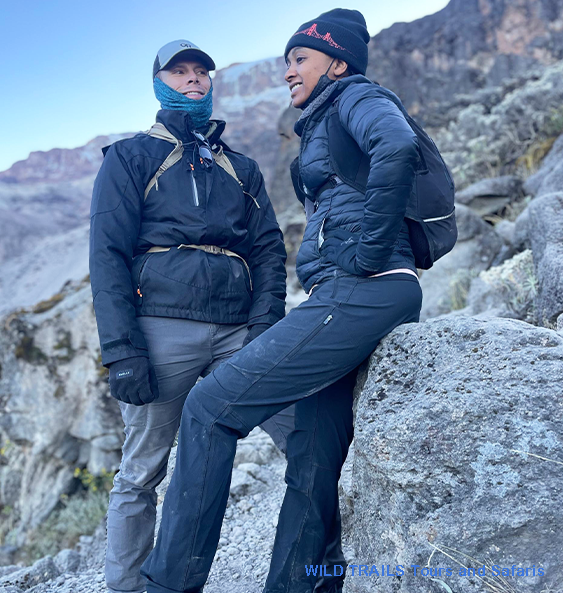
- Put on every layer you have — base layers, fleece, down jacket, shell, insulated pants, two pairs of socks, gloves, hat, balaclava.
- Check your headlamp and spare batteries.
- Fill your water bottles (they may freeze — keep them close to your body).
- Use the toilet one last time. It's your last chance before the climb.
- Pack your daypack with snacks, water, and medication.
Tip: Don't rush. It's better to start 15 minutes later than to forget something essential.
11:30 PM – 12:00 AM: Final Checks and Departure
Your guide gathers the group. They check your gear, your water, your headlamp. They remind you to walk "pole pole" — slowly, slowly. They tell you to speak up if you feel unwell.
What to expect:
- A short briefing from your guide
- A group photo (optional)
- The first steps into the darkness
Tip: Start slow. The first hour sets the pace for the rest of the night.
12:00 AM – 2:00 AM: The First Ascent
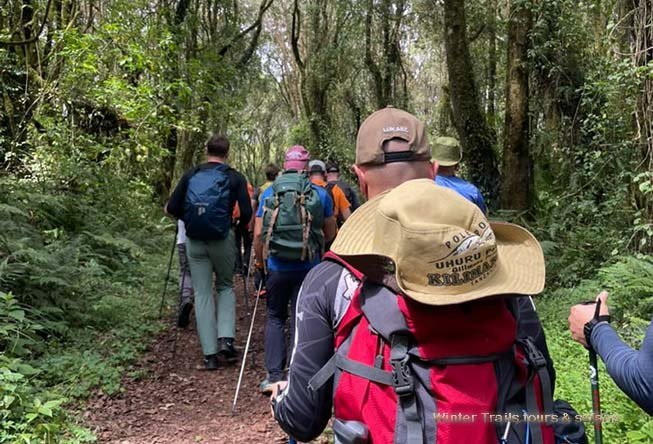
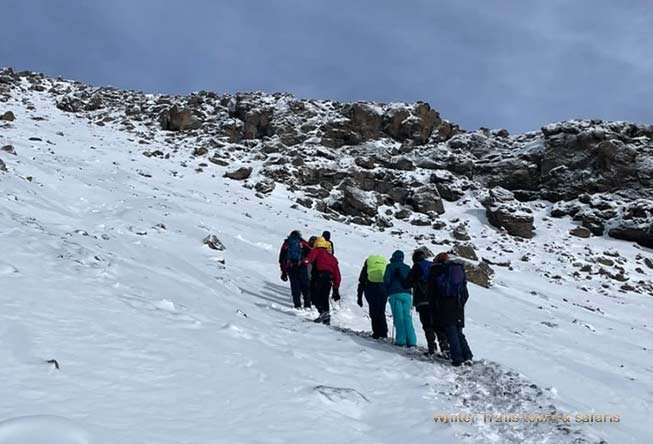
You begin walking. The trail is steep and rocky. The only light comes from your headlamp and the line of climbers ahead of you. The silence is broken only by the crunch of boots on scree and the sound of your own breathing.
What to expect:
- Cold — very cold. Your fingers and toes may feel numb.
- Slow pace — you'll take one step, then another, then another.
- Breaks — your guide will call short breaks every 30–60 minutes.
- Altitude — you may start to feel lightheaded or short of breath.
What to do:
- Keep drinking water. Even if it's cold, force yourself.
- Eat a snack on each break — energy bar, nuts, chocolate.
- Tell your guide if you feel unwell. Don't wait.
- Adjust your layers. You may be too hot or too cold — fix it early.
Tip: Don't look up. Look at the feet of the person in front of you. Focus on the next step, not the summit.
2:00 AM – 4:00 AM: The Hardest Hours
This is the part where many climbers struggle. The altitude is higher. The air is thinner. The cold is biting. The summit still feels impossibly far away.
What to expect:
- Exhaustion — your body is working hard with less oxygen.
- Doubt — your mind may start asking, "Can I really do this?"
- Nausea — altitude sickness can kick in.
- Sleepiness — the desire to sit down and rest is overwhelming.
What to do:
- Keep moving. Stopping makes it worse.
- Breathe deeply. Slow, deliberate breaths.
- Take Diamox if prescribed.
- Talk to your guide. They will assess you and decide if you can continue.
- Remember why you're here. Visualise the summit.
Tip: The hardest part is between 2:00 AM and 4:00 AM. If you can push through this, you can make it to the top.
4:00 AM – 5:30 AM: Stella Point
Stella Point (5,756m) is the first major milestone on summit night. It's where the steep scree ends and the trail flattens out along the crater rim. It's also where many climbers are turned back due to altitude sickness.
What to expect:
- A sense of relief — the hardest climbing is behind you.
- A flat walk along the crater rim toward Uhuru Peak.
- Sunrise approaching — the sky begins to lighten.
- Cold — still very cold, but the end is in sight.
What to do:
- Take a short break. Drink water. Eat a snack.
- Celebrate — you've made it past the hardest section.
- Keep walking. Uhuru Peak is 45–60 minutes away.
Tip: Stella Point is not the summit. Don't stop. Keep going.
5:30 AM – 6:30 AM: Uhuru Peak
You see it before you reach it — the famous sign that marks the highest point in Africa. The sky is turning orange and pink. The glaciers gleam in the early light. And then you're there.
What to expect:
- Overwhelming emotion — tears, laughter, relief, disbelief.
- Photos at the sign — your guide will take them.
- Cold — it's still freezing, but you don't care.
- A crowd — other climbers celebrating alongside you.
What to do:
- Take your photos. This is the moment you've worked for.
- Hug your guide. They got you here.
- Don't stay too long. The altitude is dangerous, and you need to descend.
Tip: Savour the moment, but remember — the summit is only halfway. The descent is still ahead.
6:30 AM – 8:00 AM: The Descent to Barafu
You begin the long walk back down to Barafu Camp. The trail is the same one you climbed, but now you can see it in daylight. It's steep, rocky, and covered in loose scree.
What to expect:
- Fatigue — your legs are tired, your body is exhausted.
- Heat — the sun is up, and you'll start shedding layers.
- Slippery footing — scree makes for a fast but unstable descent.
- Hunger — you haven't eaten much, and your body needs fuel.
What to do:
- Use trekking poles. They save your knees.
- Drink water. You're still dehydrated.
- Eat a snack. You need the energy.
- Take it slow. The descent is as dangerous as the ascent.
Tip: Many accidents happen on the descent. Don't rush. Focus on every step.
8:00 AM – 10:00 AM: Barafu Camp – Rest and Refuel
You arrive back at Barafu Camp. Your porter has packed your tent. You have a quick meal — usually porridge, tea, and biscuits. You rest for an hour.
What to expect:
- Exhaustion — you've just climbed for 8 hours.
- Relief — the hardest part is over.
- Hunger — eat, even if you don't feel like it.
- A short break — you still have 2–3 hours to descend to Mweka Camp.
Tip: Change your socks. Dry your feet. It prevents blisters.
10:00 AM – 1:00 PM: Descent to Mweka Camp
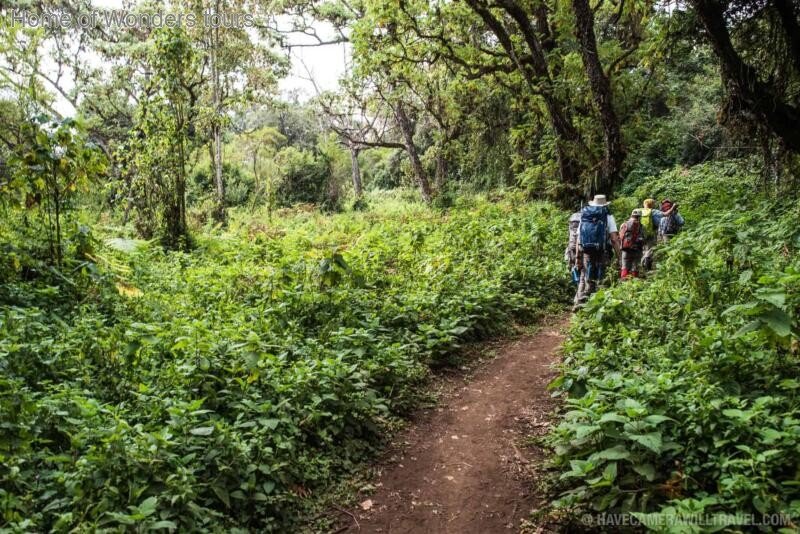
The final descent of the day takes you from Barafu (4,673m) down to Mweka Camp (3,100m). It's a long, rocky walk through moorland and rainforest.
What to expect:
- Warmer temperatures — the lower you go, the warmer it gets.
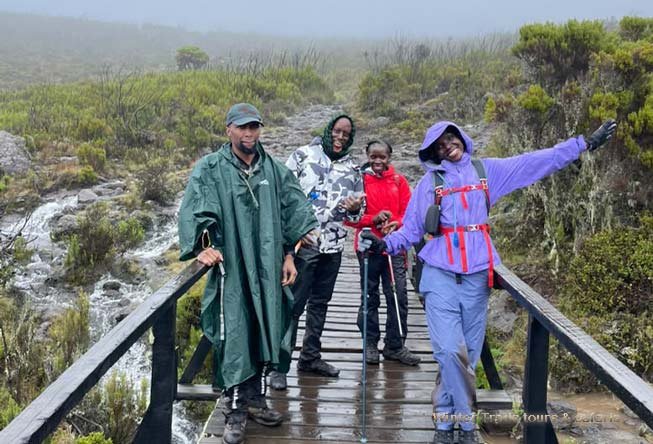
- Mud — the rainforest is wet and slippery.
- Fatigue — you've been walking for 10+ hours.
- A sense of accomplishment — you did it.
What to do:
- Keep drinking water.
- Change into dry clothes if possible.
- Celebrate with your group at camp.
Tip: You'll sleep well tonight. You've earned it.
How to Prepare for Summit Night
Before the Climb
- Train with back-to-back long hikes. Summit night is the culmination of days of walking. Your body needs to be used to fatigue.
- Test all your gear. Your boots, layers, gloves, and headlamp should be tried and tested.
- Practice walking in the dark. If possible, do a night hike before your climb.
- Prepare mentally. Visualise the summit. Practice discomfort. Know that it will be hard.
During the Climb
- Walk "pole pole." Slow and steady is the only way.
- Drink water constantly. Dehydration worsens altitude sickness.
- Eat snacks every hour. You need the calories.
- Tell your guide if you feel unwell. Don't push through severe symptoms.
- Trust your guides. They know the mountain better than anyone.
What to Pack for Summit Night
| Item | Why |
|---|---|
| Headlamp + spare batteries | You'll be walking in the dark |
| 2–3 litres of water | Hydration is critical |
| Energy snacks | Bars, nuts, chocolate |
| Diamox (if prescribed) | Prevent altitude sickness |
| Insulated gloves + liner gloves | Your hands will freeze |
| Warm hat + balaclava | Cover every inch of skin |
| Down jacket + shell | Warmth and wind protection |
| Insulated pants | Warmth |
| Hand warmers | Optional but helpful |
| Trekking poles | Balance and knee support |
| Camera | For the summit photos |
| Tissues | For runny noses |