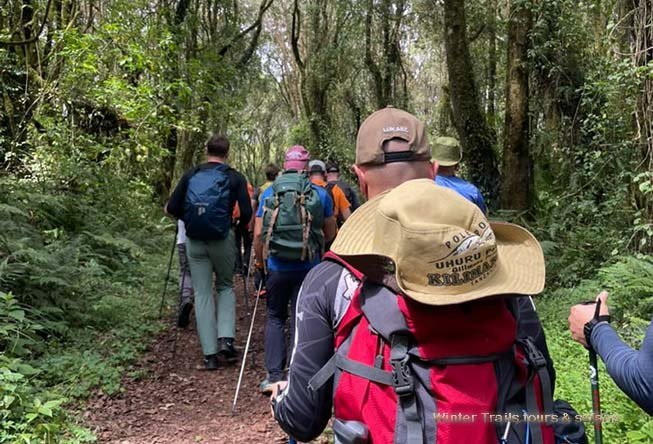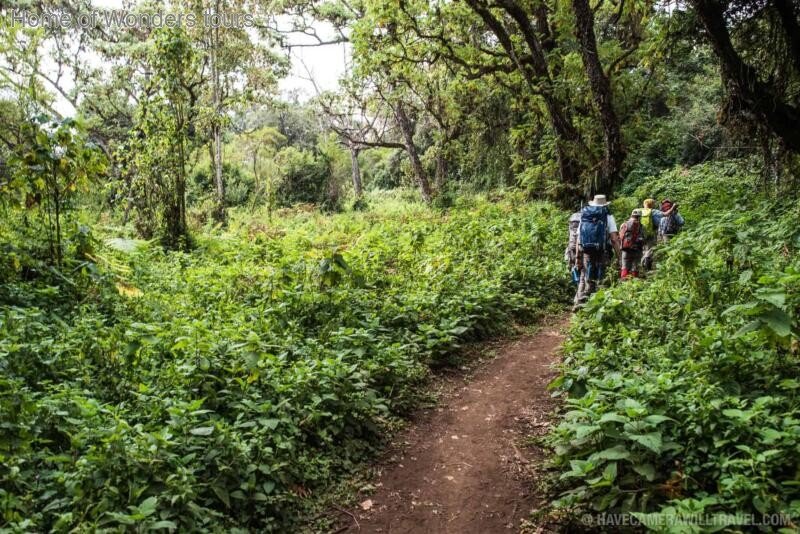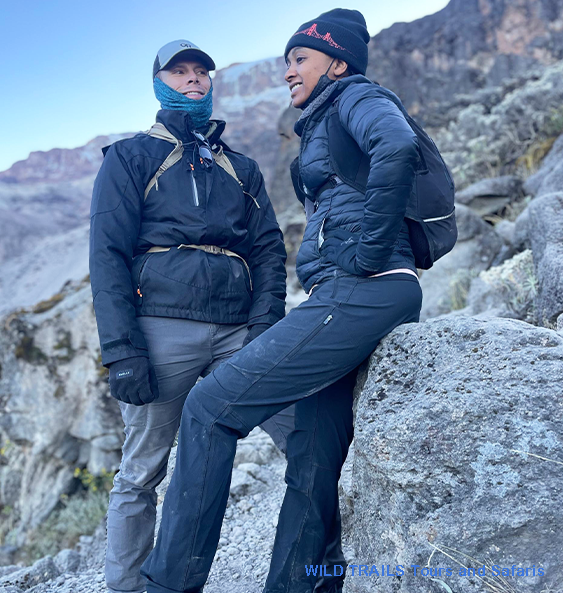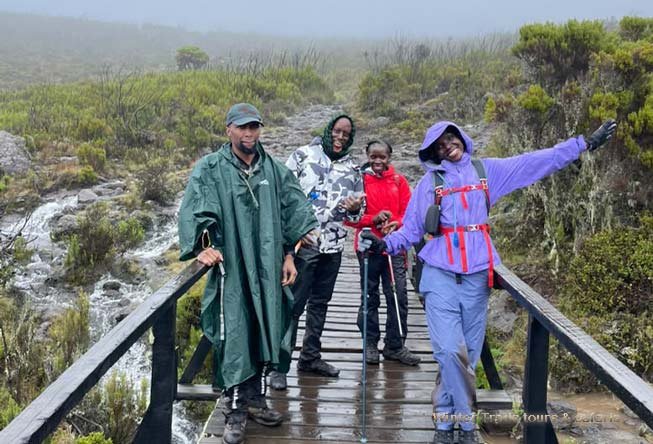
Two of Africa's most iconic treks. One is a household name. The other is a hidden gem. Mount Kilimanjaro and Mount Kenya sit just 300 kilometers apart, both offering high-altitude adventures, stunning scenery, and a true sense of accomplishment. But they are very different mountains — and choosing between them can be confusing.
Kilimanjaro is the highest freestanding mountain in the world and Africa's highest peak at 5,895 meters. Mount Kenya is Africa's second-highest mountain at 5,199 meters, a rugged, volcanic massif with technical climbing on its highest peaks and beautiful trekking on its lower slopes.
So which one should you climb? This guide compares them side by side — altitude, difficulty, scenery, cost, accessibility, and overall experience — so you can decide which East African trek is right for you.
Quick Comparison Table
| Feature | Kilimanjaro | Mount Kenya |
|---|---|---|
| Country | Tanzania | Kenya |
| Highest Point | Uhuru Peak (5,895m) | Batian (5,199m) |
| Trekking Summit | Uhuru Peak (5,895m) | Point Lenana (4,985m) |
| Technical Climbing | None | Required for Batian and Nelion |
| Duration | 5–9 days | 3–5 days |
| Difficulty | Moderate to Hard (altitude) | Moderate (trekking), Hard (technical) |
| Scenery | Diverse — rainforest to arctic | Rugged, alpine, glacial valleys |
| Acclimatisation | Challenging (rapid ascent) | Better (lower altitude) |
| Accommodation | Tents or huts | Mountain huts |
| Accessibility | Easy (Kilimanjaro Airport) | Easy (Nairobi) |
| Cost | $2,500–$6,500 | $800–$2,500 |
| Summit Success | 65–70% | 70–80% |
| Best For | First-time high-altitude trekkers | Experienced trekkers and climbers |
Kilimanjaro: The Roof of Africa
Location: Tanzania
Highest Point: Uhuru Peak (5,895m)
Trekking Summit: Uhuru Peak (5,895m)
Duration: 5–9 days
Difficulty: Moderate to Hard
Success Rate: 65–70%
Kilimanjaro is the world's highest freestanding mountain and the highest point in Africa. It's also one of the most accessible high-altitude treks on the planet — no technical climbing is required to reach the summit. That's why over 50,000 people attempt it every year.
Why climb Kilimanjaro:
- It's the highest point in Africa — a true bucket-list achievement.
- No technical skills required — just fitness and determination.
- Incredible scenery — you pass through four climate zones.
- Well-established infrastructure — many operators, routes, and accommodations.
- Accessible — Kilimanjaro International Airport is nearby.
Challenges:
- Altitude is the biggest obstacle — 40% less oxygen at the summit.
- Rapid ascent on shorter routes leads to lower success rates.
- Crowds on popular routes (Machame, Marangu).
- Higher cost than Mount Kenya.
- Summit night is long, cold, and exhausting.
Who it's for: First-time high-altitude trekkers, bucket-list chasers, and anyone who wants to stand on the highest point in Africa without technical climbing.
Mount Kenya: Africa's Second-Highest and Most Rugged
Location: Kenya
Highest Point: Batian (5,199m)
Trekking Summit: Point Lenana (4,985m)
Duration: 3–5 days
Difficulty: Moderate (trekking), Hard (technical)
Success Rate: 70–80%
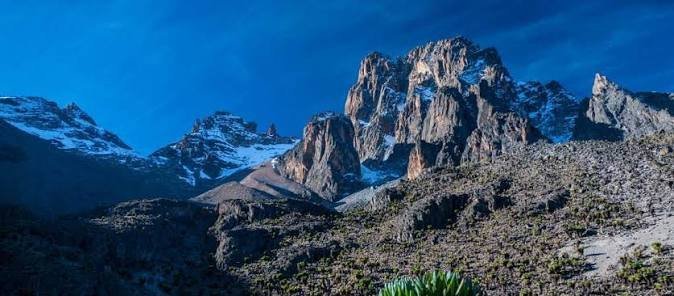
Mount Kenya is Africa's second-highest mountain and a UNESCO World Heritage Site. Unlike Kilimanjaro, its highest peaks — Batian and Nelion — require technical rock climbing. But there's a non-technical trekking summit, Point Lenana (4,985m), which is accessible to fit hikers.
Why climb Mount Kenya:
- Quieter and less commercialised than Kilimanjaro.
- Stunning alpine scenery — glaciers, tarns, and jagged peaks.
- More affordable than Kilimanjaro.
- Better acclimatisation profile — lower altitude and gradual ascent.
- Opportunity for technical climbing (Batian, Nelion) for experienced mountaineers.
Challenges:
- Point Lenana is lower than Uhuru Peak — not the highest point in Africa.
- Fewer operators and less infrastructure.
- Weather can be unpredictable.
- Technical routes require experience and gear.
Who it's for: Experienced trekkers looking for a quieter, more rugged adventure, budget-conscious climbers, and mountaineers seeking technical challenges.
Head-to-Head Comparison
Altitude and Acclimatisation
| Factor | Kilimanjaro | Mount Kenya |
|---|---|---|
| Summit Altitude | 5,895m | 4,985m (Point Lenana) |
| Oxygen at Summit | ~60% of sea level | ~65% of sea level |
| Acclimatisation Difficulty | High — rapid ascent | Moderate — gradual ascent |
| Altitude Sickness Risk | High | Moderate |
Winner: Mount Kenya. The lower altitude and more gradual ascent make acclimatisation easier. Kilimanjaro's rapid ascent is the main reason for its lower success rate.
Difficulty
| Factor | Kilimanjaro | Mount Kenya |
|---|---|---|
| Technical Climbing | None | Required for Batian/Nelion |
| Trekking Difficulty | Moderate to Hard | Moderate |
| Summit Day | 12–16 hours, very cold | 6–10 hours, cold |
| Terrain | Scree, rock, snow | Rock, scree, alpine |
Winner: Mount Kenya for trekking (easier summit day), but Kilimanjaro for non-technical climbers who want the highest peak. Mount Kenya's technical routes are much harder than anything on Kilimanjaro.
Scenery
| Factor | Kilimanjaro | Mount Kenya |
|---|---|---|
| Climate Zones | 4 (rainforest to arctic) | 3 (forest to alpine) |
| Highlights | Shira Plateau, Barranco Wall, glaciers | Point Lenana, Mackinder Valley, tarns |
| Variety | Excellent | Excellent |
Winner: Tie. Kilimanjaro offers more climate diversity, but Mount Kenya's rugged alpine scenery is arguably more dramatic.
Cost
| Factor | Kilimanjaro | Mount Kenya |
|---|---|---|
| Budget | $2,500–$3,500 | $800–$1,200 |
| Mid-Range | $3,500–$4,800 | $1,200–$1,800 |
| Luxury | $5,000–$6,500+ | $1,800–$2,500 |
Winner: Mount Kenya. It's significantly cheaper across all tiers.
Accessibility
| Factor | Kilimanjaro | Mount Kenya |
|---|---|---|
| Nearest Airport | Kilimanjaro (JRO) | Nairobi (NBO) |
| Transfer Time | 1 hour to Moshi | 3–4 hours to Nanyuki |
| Operator Availability | High | Moderate |
Winner: Kilimanjaro. More operators, more routes, and easier access.
Crowds
| Factor | Kilimanjaro | Mount Kenya |
|---|---|---|
| Annual Climbers | 50,000+ | 10,000–15,000 |
| Peak Season Crowds | High | Low to Moderate |
Winner: Mount Kenya. It's far less crowded, offering a more solitary experience.
Which One Should You Choose?
Choose Kilimanjaro if:
- You want to stand on the highest point in Africa.
- You're a first-time high-altitude trekker.
- You want a non-technical climb with a big reward.
- You have a higher budget.
- You want established infrastructure and many operator options.
- You want to combine your trek with a Tanzania safari.
Choose Mount Kenya if:
- You want a quieter, more rugged adventure.
- You're on a tighter budget.
- You're an experienced trekker looking for a new challenge.
- You want to attempt technical climbing (Batian or Nelion).
- You want better acclimatisation and a higher success rate.
- You want to combine your trek with a Kenya safari.
Can You Climb Both?
Yes — and some trekkers do. A popular combination is to climb Mount Kenya first as a warm-up and acclimatisation trek, then tackle Kilimanjaro. Mount Kenya's lower altitude and gradual ascent help your body adjust to altitude, making Kilimanjaro's summit more achievable.
Photo Gallery