Mount Kilimanjaro is Africa's highest peak at 5,895 meters, and it's one of the most sought-after trekking experiences in the world. But how hard is it really? The honest answer is that Kilimanjaro is hard — but not for the reasons most people expect. It's not a technical climb. You won't need ropes, harnesses, or ice axes. What makes it difficult is something far more unpredictable: altitude.
At the summit, your body is working with roughly 40% less oxygen than at sea level. No amount of fitness can fully prepare you for that. But with the right training, a sensible route choice, and a slow pace, most active people in reasonable health can reach Uhuru Peak.
This guide breaks down exactly what makes Kilimanjaro hard, what fitness you actually need, and how to prepare — so you can decide whether the roof of Africa is within your reach.
What Makes Kilimanjaro Hard? The Four Core Challenges
1. Altitude: The Great Equaliser
Altitude is the single biggest challenge on Kilimanjaro. At 5,895 meters, the air contains roughly 40% less oxygen than at sea level. Your body can adapt through a process called acclimatisation, but that adaptation takes time — and the longer your route, the better your chances.
Altitude sickness can affect anyone regardless of fitness level. In fact, young, healthy people sometimes struggle more than older travellers because they push faster. More than half of all climbers experience altitude sickness, and about 65% don't make it to the summit on a first attempt.
The most important thing you can do to improve your chances is choose a longer route. Routes that ascend slowly give your body time to adjust. Routes that rush the ascent don't.
2. The Walking: Long, Not Technical
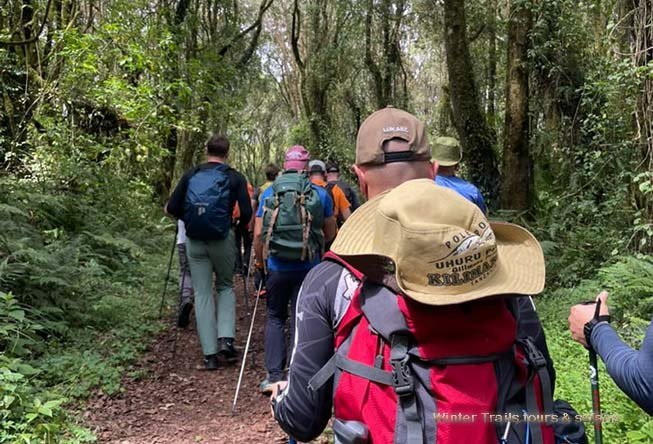
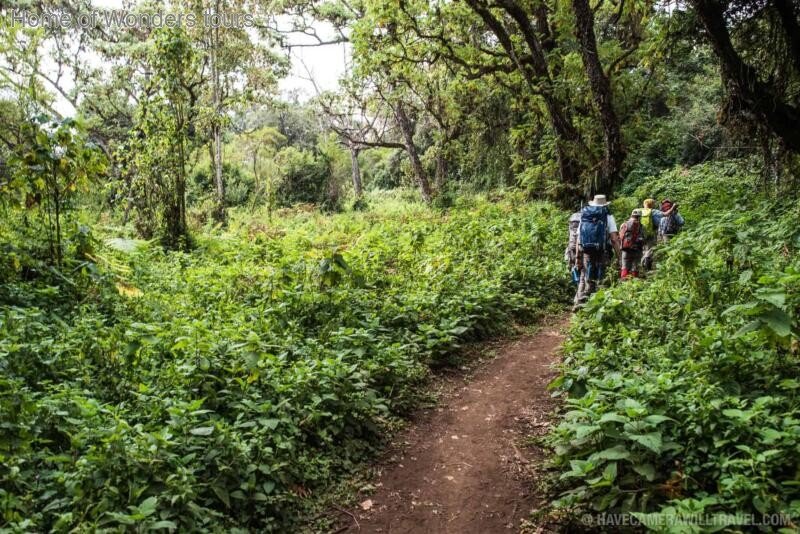
You do not need to be an athlete to summit Kilimanjaro. You need to be able to walk 5–8 hours per day for 5–9 consecutive days, carrying a daypack of 5–8 kg, over varied terrain including steep rocky sections and loose scree.
The steepest day on the Machame route involves scrambling over large boulders for 2–3 hours at the Barranco Wall. The longest day is summit night — 12–16 hours of walking, much of it in freezing temperatures on steep volcanic scree.
Fitness helps enormously. But the most important factor is not how fit you are — it's how well you manage your pace and listen to your body.
3. Temperature: Four Seasons in One Climb
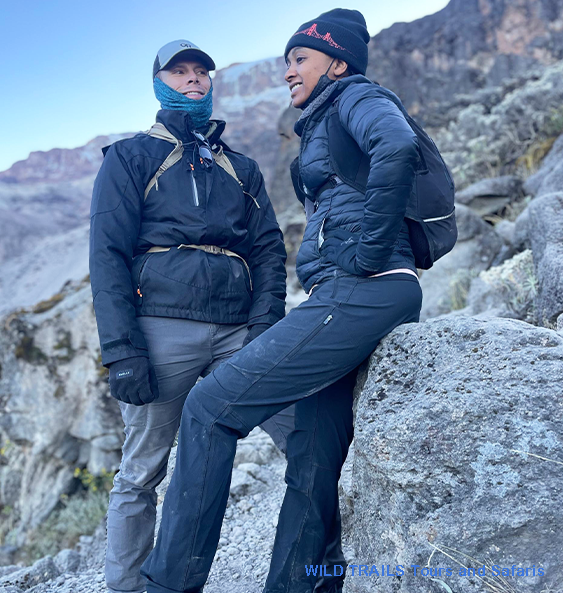
You'll experience all four climate zones on a single trek. At the base, temperatures can reach 25–30°C. At the summit, temperatures can drop to -15°C or lower. Summit night is notoriously the hardest part of the climb, with freezing temperatures, high winds, and an ascent of 1,244m to the top. After reaching the summit, climbers must descend nearly 2,094m in the same day, resulting in a 12–14 hour trek.
4. Mental Resilience: The Summit Night Test
The summit night is where most people give up. Walking in darkness, cold, and thin air for 6–8 hours is a significant mental challenge. Mental fatigue is as significant as physical fatigue by day five. Trekking for long hours, sleeping in tents, and coping with extreme weather requires mental resilience that goes beyond physical preparation.
How Fit Do You Need to Be?
You do not need to be an elite athlete to climb Kilimanjaro, but a reasonable level of fitness is essential.
The honest benchmark: you need to walk uphill for 6–8 hours a day with a 6–8 kg pack for 6–8 consecutive days, finishing with a 14–18 hour summit day at altitude. You do need 12–16 weeks of consistent training and the right route choice.
Here's what that means practically:
| Requirement | Benchmark |
|---|---|
| Multi-day hiking | Comfortable with 5–7 hours of walking per day for consecutive days |
| Elevation gain | Can complete a 5-hour hike with ~1,000m elevation gain and feel tired but functional |
| Pack weight | Comfortable carrying 5–8 kg daypack on varied terrain |
| Cardiovascular | 3–5 hours of continuous low-intensity activity |
| Leg strength | Quads, calves, and hip stabilizers conditioned for sustained effort |
A useful benchmark from Adventure Consultants: if you can complete a 5-hour hike with around 1,000m of elevation gain and feel tired but functional at the end, you're in the right range.
Pure cardiovascular fitness is necessary but not sufficient. Plenty of marathon runners fail to summit. Plenty of CrossFit athletes turn back at Stella Point. The endurance you need comes from long, slow efforts — not interval training.
Summit Success Rates by Route
Training matters, but route choice matters just as much. Longer routes give your body more time to acclimatize, dramatically improving your summit odds.
| Route | Days | Summit Success Rate | Best For |
|---|---|---|---|
| Marangu | 5–6 | 55–60% | Budget climbers (lowest success) |
| Machame | 6–7 | 65–70% | Intermediate hikers |
| Rongai | 6–7 | 75–80% | Quieter route, northern approach |
| Lemosho | 7–8 | 70–75% | First-timers (recommended) |
| Northern Circuit | 9–10 | 80%+ | Best acclimatisation, highest success |
Source: Himalayan Glacier
The overall Kilimanjaro success rate sits between 65% and 80% across all routes and operators, but that average hides enormous variation. Climbers on 5-day routes summit as little as 27% of the time. On well-planned 7–8 day climbs, success rates rise to 75–85%. On short 5–6 day climbs, they drop to 50–65%.
The difference is not fitness — it's acclimatisation.
Your 12-Week Training Plan
A structured training plan is essential. Here's a progressive framework designed to peak on departure day:
Weeks 1–4: Foundation (Base Building)
- 3–4 cardio sessions per week (30–45 min): brisk walking, jogging, cycling, swimming
- 1 weekend hike (2–3 hours) on trails or hills
- Light core work twice weekly (planks, bridges, leg raises)
- Focus: Consistency, not intensity
Weeks 5–8: Build (Strength & Endurance)
- 4 cardio sessions per week (45–60 min), including 1 interval session
- 1 midweek hike (2–3 hours) with a light pack (3–4 kg)
- 1 long weekend hike (4–6 hours) on steep terrain if possible
- Add squats, lunges, and step-ups (2x weekly)
- Focus: Mimic the demands of multi-day hiking
Weeks 9–11: Peak (Simulation)
- Back-to-back long hikes on Saturday and Sunday (4–5 hours each)
- Hike with your full Kilimanjaro pack (5–8 kg daypack)
- Include stair climbing or steep hill repeats (1x weekly)
- Test all gear — boots, socks, layers — on these hikes
- Focus: Back-to-back hiking is the single best simulation
Week 12: Taper
- Reduce volume by 50–60%
- 2–3 easy cardio sessions (30 min)
- 1 short hike (2 hours) in week 1, then rest
- Focus: Arrive fresh, not fatigued
Source: Trail Safari Explorers
How to Prevent Altitude Sickness
Altitude sickness cannot be totally prevented, but you can significantly reduce your risk.
Choose a longer route. Routes with a rest day built in can increase your chances of success by nearly one-third.
Walk "pole pole." This is the only sensible pace at which to ascend. Slow down and listen to your guides.
Stay hydrated. Drink at least 4 litres of fluids every day on the climb. Avoid alcohol, tobacco, and any drugs with a depressant effect (even sleeping tablets).
Sleep low, climb high. Choose an itinerary that involves sleeping at a lower altitude than the high point of the day's climb.
Be honest about your health. When your guides ask how you're feeling, be 100% honest. Ignoring symptoms can be dangerous — even fatal.
Consider Diamox. Some climbers use acetazolamide (Diamox) to help prevent altitude sickness. It doesn't work for everyone and can cause side effects, so consult your doctor and test it at home before relying on it.
Who Can Climb Kilimanjaro?
You can climb if you:
- Can walk 5–7 hours per day for 5+ consecutive days
- Have no serious heart, lung, or respiratory conditions
- Are cleared by your physician (required over 65)
- Are willing to walk slowly and listen to your body
- Can handle cold, basic accommodation, and limited shower facilities
- Have a positive mental attitude — the summit is a state of mind
You should reconsider if you:
- Have a serious cardiovascular or respiratory condition
- Are not willing to train properly in the months before
- Expect a comfortable hotel experience — this is camping/lodge-based
- Have a fear of heights (some exposed sections exist)
- Are unwilling to descend if you develop altitude symptoms
- Expect to rush — fast walkers have the lowest success rates
The Final Verdict
Kilimanjaro is a hard endurance trek, not a technical climb. The difficulty is almost entirely driven by altitude — the air at 5,895m contains roughly 40% less oxygen than at sea level.
If you're reasonably fit, willing to train for 12–16 weeks, and choose a 7–9 day route, the climb is realistic for many active travellers. The safest plan is a long route, a slow pace, and at least one recovery day before safari.
The mountain doesn't care how fast you are. It cares how well you acclimatise, how patiently you walk, and how honestly you listen to your body. Do those things, and Uhuru Peak is within reach.
Photo Gallery