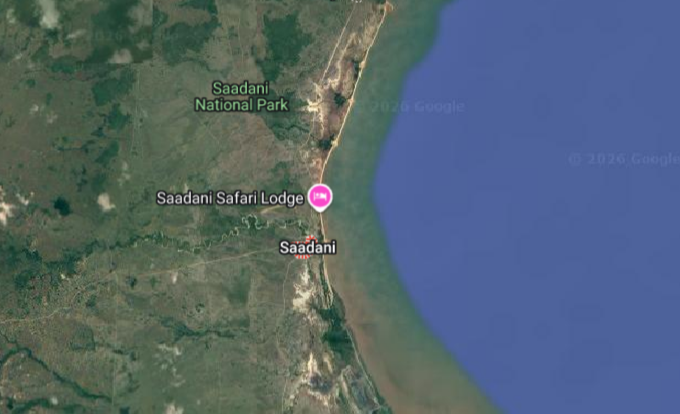
There are not many places on earth where you can watch elephants strolling along a white-sand beach at dawn, then sail down a river past pods of hippos and basking crocodiles by lunchtime. Saadani National Park, Tanzania's only coastal national park, offers exactly that — a rare collision of savanna, river, and Indian Ocean that creates one of the most unusual wildlife-watching destinations in East Africa. Gazetted in 2005 and covering roughly 1,100 square kilometres, Saadani is where acacia savanna and mangroves meet the sea, and where a safari unfolds not just across dusty plains, but along shorelines, estuaries, and tidal creeks .
This is not the Serengeti. You will not find vast herds of wildebeest stretching to the horizon, and the predator sightings here are more a matter of luck than expectation. What Saadani offers instead is something quieter, stranger, and arguably more remarkable: a chance to see wildlife in a setting that exists almost nowhere else — where a lion might walk on sand still wet from the tide, and where dolphins can be glimpsed from the deck of a boat on the same day you spot a giraffe browsing beside a coconut palm.
The Large Mammals of the Coastal Savanna
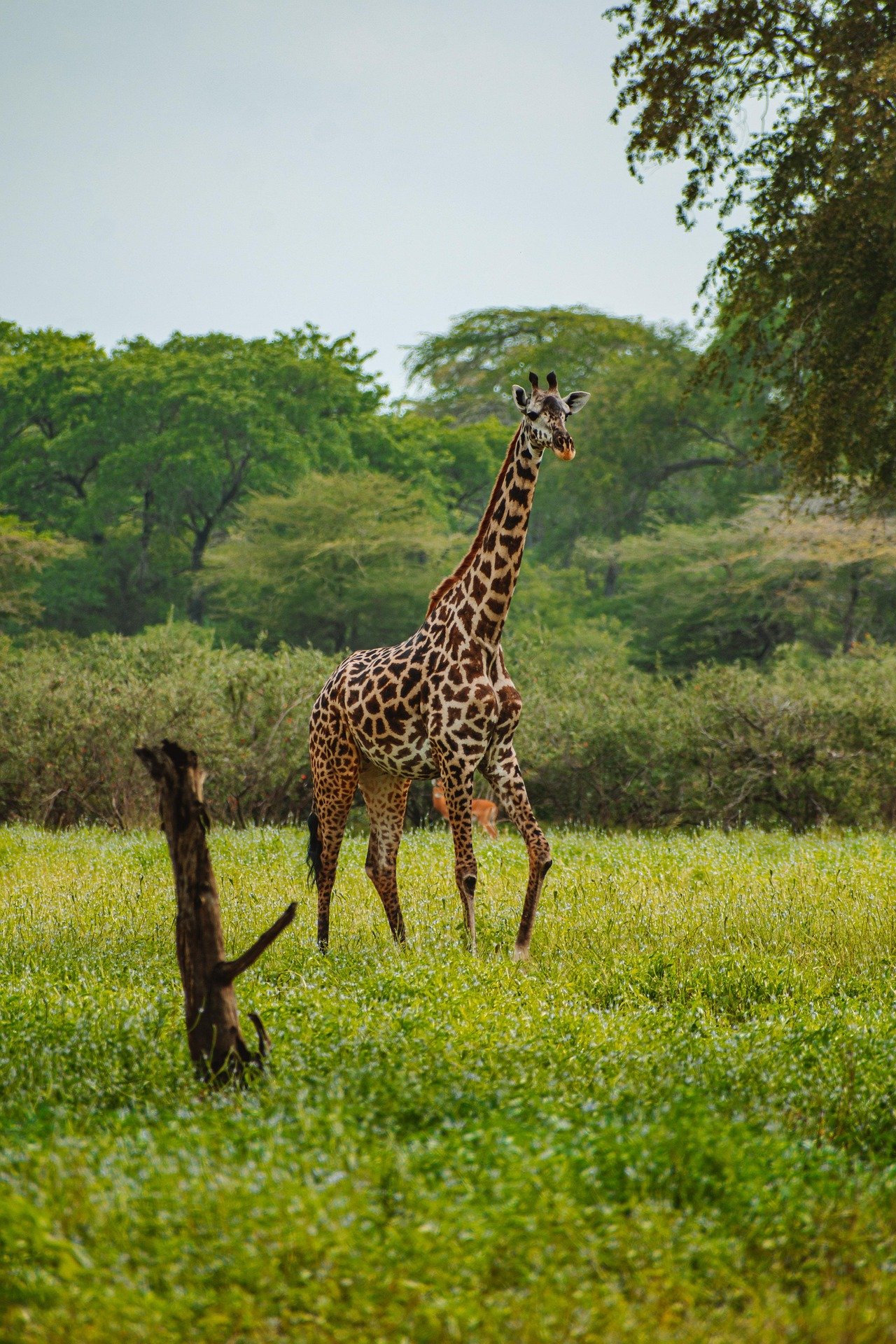
Saadani's savanna is home to a solid cast of classic African wildlife. Giraffes — Masai giraffes, with their distinctive jagged-edged patches — are among the most commonly seen animals on game drives, often browsing acacia and palm trees in small groups. Buffalo are present in good numbers, as are waterbuck, warthog, and Lichtenstein's hartebeest, a handsome, long-faced antelope that thrives in the park's open grasslands .

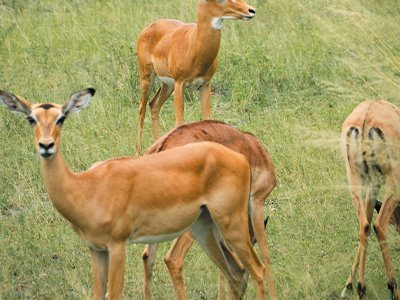
Zebra and reedbuck share the coastal plains, and you may also encounter blue wildebeest, bohor reedbuck, common and red duiker, and the tiny dik-dik, a diminutive antelope that darts through the undergrowth . Eland — the world's largest antelope — are occasionally seen, and the park supports populations of greater kudu and sable antelope, two species prized by safari-goers for their rarity elsewhere in Tanzania .
Elephants are the headline attraction here. Saadani's elephants are not present in the enormous numbers you might find in the Ruaha or Selous, but they are frequent visitors to the Wami River and the coastal savanna, and there is perhaps no more magical sight in the park than a herd of elephants wading through the shallows of the Wami in the early morning light . They occasionally walk on the beach itself, leaving footprints in the sand that are erased with the next tide .
Predators and Scavengers
Four of the Big Five call Saadani home: lion, African bush elephant, Cape buffalo, and leopard . Lions are present and have been recorded within the park, though they can be skittish and sightings are never guaranteed . Several lion prides are thought to range across the park's savanna and coastal thickets .
Leopards are shyer still, their presence known more often from tracks and alarm calls than from direct sightings. Spotted hyena and black-backed jackal are both present and more frequently encountered, particularly on night drives if your lodge offers them . Smaller predators and scavengers include mongooses, genets, and porcupines, though these are mostly nocturnal and rarely seen by casual visitors .
The Wami River: Hippos, Crocodiles, and Birdlife
The Wami River is the beating heart of Saadani's wildlife experience. It flows through the park and empties into the Indian Ocean, creating a ribbon of life that supports an extraordinary concentration of animals and birds. The river hosts a large population of hippos — one of the park's most reliable big-game sightings — and Nile crocodiles, which can be seen basking on the banks or gliding silently through the water .
A boat safari on the Wami is the signature Saadani experience. Drifting quietly past hippo pods, crocodile banks, and mangrove-fringed channels, you gain a perspective on the park that is simply impossible from a vehicle. The birdlife along the river is exceptional: pied kingfishers, malachite kingfishers, fish eagles, little bee-eaters, and — during the right season — lesser flamingos, which gather in the saltpans and shallow waters of the estuary . Elephants are often seen bathing and playing in the river, particularly in the early morning hours .
Primates and Small Mammals
Saadani's coastal forests and riverine thickets support a surprisingly diverse primate community. Yellow baboons are common and conspicuous, often seen in troops foraging along the savanna edge. Vervet monkeys — those charming, mischievous small primates with distinctive blue genitalia — are equally widespread, and blue monkeys are present in the denser forest patches .
The park is also home to colobus monkeys, whose striking black-and-white coats and long, flowing tails make them unmistakable . These are canopy specialists, rarely descending to the ground, and are most often seen in the taller trees of the coastal forest. Smaller mammals include bushbabies, various rodents, and the occasional African wildcat, though these are difficult to spot without a guide's expert eye.
Reptiles and the Marine Ecosystem
Beyond the crocodiles of the Wami, Saadani supports a variety of reptiles adapted to its sandy, coastal habitats. Nile monitors — large, intelligent lizards that can reach two metres in length — are frequently seen near water, and various snakes and geckos inhabit the dune scrub and forest edges .
The park's marine ecosystem is where Saadani truly distinguishes itself from every other safari destination in Tanzania. Offshore, dolphins are regularly sighted, and during the migration season humpback whales pass through the coastal waters . The coral reefs of the Mafui Sandbank area serve as breeding grounds for numerous fish species, making this a rewarding destination for snorkelling and diving .
But the most remarkable marine resident is the green turtle. Saadani's beaches are one of the few remaining significant breeding sites for green sea turtles in Tanzania, and the park is the only national park in the country to protect nesting beaches for this endangered species . Between roughly March and July, female turtles come ashore at night to lay their eggs in the sand, and hatchlings emerge weeks later to make their perilous dash to the sea. The park operates nest patrols and monitoring programmes to protect these vulnerable animals .
A Birdwatcher's Paradise
With over 300 recorded species — some surveys have counted as many as 400 — Saadani is one of Tanzania's most underrated birding destinations . The park's diversity of habitats — mangrove forests, tidal flats, riverine thickets, coastal savanna, and dune scrub — supports an equally diverse bird community.
The tidal creeks and sandbanks are particularly rewarding. Little bee-eaters, pied kingfishers, and fish eagles are commonly seen along the river and estuary, while coastal forests add hornbills, barbets, and numerous forest specialists . Migratory shorebirds use the sandbanks and estuaries as staging grounds, and waders of all descriptions probe the mudflats at low tide .

The saltpans near the coast attract flamingos in impressive numbers — surveys have recorded averages of 400 greater flamingos and 500 lesser flamingos at a single site . For birders, Saadani offers the rare combination of coastal, wetland, and savanna species in a single, relatively compact area.
A Safari Unlike Any Other
What makes Saadani's wildlife special is not just what you see, but how you see it. A morning game drive might take you along the shoreline, where the bush meets the beach and coconut palms lean over the sand. An afternoon boat safari drifts down the Wami, past hippos and crocodiles and elephants bathing in the shallows. An evening beach walk might reveal the tracks of a turtle that came ashore the night before, or the footprints of a lion that passed this way at dawn.
It is a safari that unfolds in layers — savanna, river, mangrove, ocean — each with its own cast of characters. And because Saadani receives far fewer visitors than Tanzania's northern parks, you are likely to experience much of it in near solitude. There is no traffic jam of safari vehicles here. There is just you, the wildlife, and the sound of the Indian Ocean somewhere in the distance.
Conservation and Responsible Wildlife Watching
Saadani's unique coastal ecosystem faces real pressures. Mangrove forests are vulnerable to clearance, dune systems are easily damaged, and turtle nesting beaches require careful protection. The park operates several conservation programmes, including mangrove restoration pilots near the Wami estuary, turtle nest monitoring along remote beaches, and community-led beach clean-ups .
For visitors, responsible wildlife watching is straightforward. Keep to designated tracks and boardwalks to protect fragile dune vegetation. Avoid disturbing turtle nesting areas, and follow ranger guidance on beach walks during nesting season. On boat safaris, stay with your guide and respect the distance regulations around hippos and crocodiles — these are wild animals, and the Wami is their territory . Do not feed any wildlife, and keep your distance from elephants and buffalo, which can be unpredictable when approached too closely.
Plan Your Saadani Safari
The best time to visit Saadani for wildlife is during the dry seasons — June to September and January to February — when animals concentrate around water sources and visibility through the bush is better . The park is accessible year-round, though some tracks may become difficult after heavy rain.
Saadani is reached by road from Dar es Salaam via Bagamoyo (about 131 kilometres to the Gama/Wami entrance gate), from Tanga via Pangani, or from Arusha via Mkata. Charter flights can land at Saadani airstrip from Dar es Salaam, Zanzibar, Tanga, or Arusha .
Winter Trails Tours arranges tailor-made Saadani safaris combining game drives, Wami River boat safaris, guided beach walks, and stays at the park's coastal lodges. Whether you are looking for a short escape from Dar es Salaam, a complement to a longer Tanzania safari, or a beach-and-bush holiday unlike any other, Saadani delivers something increasingly rare in the modern safari world: genuine wildness, in a setting you will not find anywhere else.
Photo Gallery