Where Is Zanzibar Located? A Complete Guide to the Spice Island's Place in the World
The Short Answer
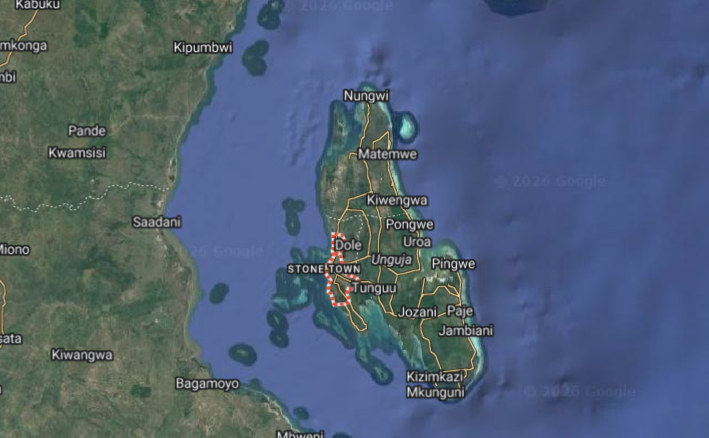
Zanzibar is an archipelago in the Indian Ocean, lying just off the coast of East Africa. Politically, it is a semi-autonomous region of Tanzania, though it operates with its own president, parliament, and flag. Geographically, it sits roughly 25 to 50 kilometres east of the Tanzanian mainland, just south of the equator, at approximately 6 degrees south latitude and 39 degrees east longitude. If you trace your finger down the east coast of Africa, past Kenya and into Tanzania, then let your finger drift a little to the right, into the ocean — that is where you will find Zanzibar.
But the full answer is more interesting than a set of coordinates. Zanzibar's location has shaped its history, its culture, its food, its economy, and its identity. To understand where Zanzibar is, you have to understand not just where it sits on a map, but what that position has meant for the island over the last thousand years.
Where Exactly Is It?
Let me be more precise. The Zanzibar archipelago consists of two main islands and a scattering of smaller ones. The larger and better-known island is called Unguja, though in everyday speech people simply call it Zanzibar. The second-largest island is Pemba, which lies about 50 kilometres to the north of Unguja and is quieter, greener, and less visited. Around these two islands are dozens of small islets — Mnemba, Chumbe, Chapwani, Bawe, and others — some of them private, some protected as marine conservation areas, some little more than sandbars that disappear at high tide.
Unguja is roughly 85 kilometres long and between 20 and 30 kilometres wide, giving it a total area of about 1,666 square kilometres. Pemba is smaller, at about 988 square kilometres, but hillier and more fertile. Together, the two islands form a landmass that would fit comfortably inside the borders of a small European country.
The main city, Zanzibar City, sits on the western side of Unguja, facing the mainland. Its historic core is Stone Town, a UNESCO World Heritage Site and one of the most atmospheric cities in Africa. Stone Town faces the channel that separates Zanzibar from the Tanzanian mainland, and on a clear day you can see the coastline of the mainland from the waterfront.
The Nearest Mainland
The stretch of ocean between Zanzibar and the Tanzanian mainland is called the Zanzibar Channel. It is not particularly wide — at its narrowest point, between Unguja and the mainland, it is roughly 40 kilometres across. The main ferries and boats cross this channel in about two hours, and the nearest large city on the mainland is Dar es Salaam, Tanzania's commercial capital. From Stone Town's waterfront, the lights of Dar es Salaam are visible at night on the horizon, and the ferry crossing between the two is one of the most travelled routes in East Africa.
Further north along the mainland coast lies Bagamoyo, a historic town that was once the terminus of the slave and ivory caravans that came from the interior and crossed to Zanzibar. Further south lies the Rufiji Delta and, beyond it, the sprawling wilderness of the Selous Game Reserve. Inland from the coast are the great safari parks — the Serengeti, the Ngorongoro Crater, Tarangire, and Kilimanjaro — which is why Zanzibar so easily pairs with a mainland safari.
How to Get There
Part of what makes Zanzibar remarkable is how accessible it is despite feeling so far away. Here are the main ways travellers reach the island.
By air: Abeid Amani Karume International Airport, just south of Zanzibar City, receives direct flights from a growing number of international destinations, including Nairobi, Addis Ababa, Doha, Dubai, Istanbul, and several European cities. From mainland Tanzania, there are frequent short flights from Dar es Salaam (about twenty minutes), Arusha (about one and a half hours), and the Serengeti airstrips, making it easy to combine a safari with a beach holiday.
By ferry: The most popular route is the ferry from Dar es Salaam to Stone Town, which takes roughly two hours on a modern fast ferry. Several companies operate the route, and boats depart throughout the day. There are also ferries between Unguja and Pemba, though these are less frequent and more weather-dependent.
By private boat: Some travellers arrive by private yacht or dhow, particularly those sailing the East African coast. The Zanzibar Channel is navigable year-round, though the winds and tides require local knowledge, and most visitors arrive by air or ferry.
Where Zanzibar Sits in the Wider World
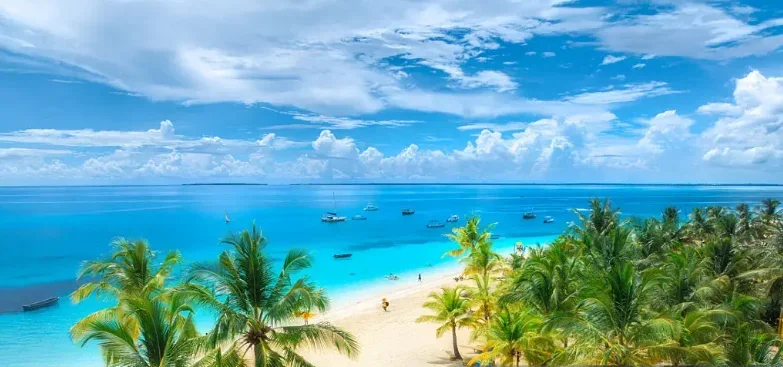
It helps to place Zanzibar in a few different contexts, because its location is meaningful on several scales at once.
In Africa: Zanzibar is part of East Africa, the region that includes Kenya, Tanzania, Uganda, Rwanda, and Burundi. It sits at the heart of the Swahili Coast, the long stretch of Indian Ocean shoreline where for over a thousand years Arab, Persian, Indian, and African traders met, mixed, and built a shared culture. That Swahili culture — its language, its architecture, its cuisine, its music — is what gives Zanzibar its distinctive character, and it exists precisely because of where the island sits.
In the Indian Ocean: Zanzibar is part of the Indian Ocean world, the vast maritime network that connected East Africa to Arabia, India, Persia, and eventually China. For centuries, Zanzibar was a crucial hub in this network — a place where ivory, slaves, cloves, and spices were traded, and where ships from across the ocean found safe harbour. Even today, the island's economy and culture are oriented toward the sea.
In Tanzania: Politically, Zanzibar is part of the United Republic of Tanzania, which was formed in 1964 when Tanganyika (the mainland) and Zanzibar merged. However, Zanzibar retains a high degree of autonomy. It has its own president, its own parliament, its own judiciary, and its own immigration procedures. Travellers arriving in Zanzibar from mainland Tanzania often have to show their passports, and visitors from some countries need a separate visa. This semi-autonomous status is unusual, and it reflects the island's distinct identity and history.
In the global imagination: Zanzibar is one of those place names that carries weight far beyond its size. It appears in literature, in music, in film. It was the home of Freddie Mercury. It was the setting for countless stories of exploration and trade. It was, and remains, a byword for the exotic, the romantic, the faraway. Its location — on the edge of Africa, in the middle of the ocean, at the crossroads of civilisations — is a large part of why.
Photo Gallery