Packing for Kilimanjaro is not the same as packing for a normal trek. You are climbing through four climate zones in seven days, sleeping in tents, eating at altitude, and asking your body to perform on less than half the oxygen it is used to. What you carry — and what you choose to leave behind — has a direct effect on how well you climb, how comfortable you are, and whether or not you reach the summit.
Packing for the Umbwe Route adds another layer of complexity. Because Umbwe is the steepest and most exposed route on the mountain, your gear list needs to account for three things that do not come up on other routes:
Steep, uneven terrain. Your footwear and poles matter more on Umbwe than on any other route. Loose scree, wet rock, and narrow ridge sections demand boots with real grip and ankle support, and poles that will hold up under your full weight on descents.
Exposure and cold. The ridge sections on days two and three are exposed, windy, and often colder than the trekkers below you on other routes will experience at the same altitude. Windproof layers matter.
A demanding summit night. Umbwe's summit push is identical to Machame's, but you arrive at it more fatigued. Every gram of warmth, every working battery, every backup pair of gloves counts.
This guide covers everything you need. It is divided into what you bring, what you rent, what you leave behind, and how to pack it. Read it once, and you will know exactly what goes in your duffel.
How Luggage Works on Kilimanjaro
Before we get to the gear itself, it helps to understand how luggage moves on the mountain. Every trekker on Kilimanjaro carries three separate bags, and each has a different role.
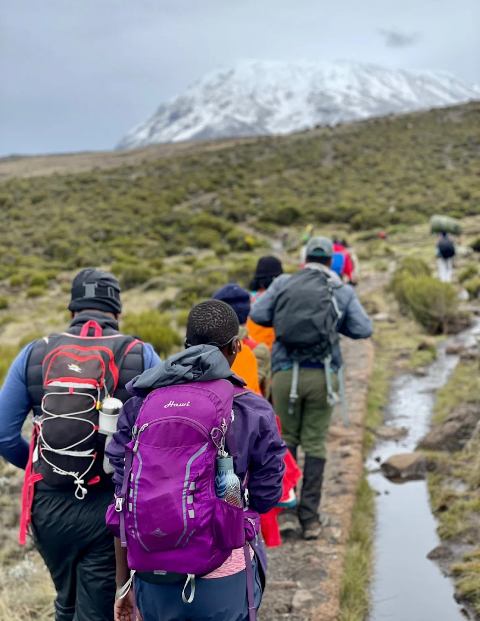
Daypack (you carry it). 25–35 litres. Holds everything you need during the walking day — water, snacks, layers you are not currently wearing, camera, sunscreen, first-aid essentials, and rain gear. It weighs 5–7 kg. This is the only bag you touch while walking.
Duffel bag (porters carry it). 80–100 litres. Holds your clothing, sleeping bag, sleeping mat, and any other gear you only need at camp. Porters carry this and set it up at camp before you arrive. Weight limit is typically 15 kg per trekker, and it must be soft-sided — no hard suitcases, no wheels (porters carry them on their heads).
Storage bag (left behind). Anything you are not taking on the mountain stays at your lodge in Moshi in a bag the lodge stores for you. This is where you keep your travel clothes, electronics you do not need, and anything for your post-trek plans.
Knowing this structure shapes everything else. Your duffel is for camp comfort. Your daypack is for the walk. Your lodge bag is for everything else.
The Complete Umbwe Route Packing List
Footwear
Hiking boots. The single most important item on this list. For Umbwe, you need boots with real ankle support, deep lugs for grip on loose scree and wet rock, and a fit that is broken in before you arrive. Mid-to-high cut, waterproof, and rated for cold temperatures. Bring them broken in — brand-new boots on Kilimanjaro are one of the most common causes of failed treks.
Camp shoes or sandals. Lightweight, closed-toe shoes you can slip into at camp. Your boots will be wet and cold at the end of each day, and your feet will need a break. Crocs or simple sport sandals work well.
Gaiters. Protect your boots and lower legs from scree, dust, and snow. Not essential on all routes, but genuinely useful on Umbwe's loose sections. Rentable in Moshi.
Socks. Four to six pairs. Wool or synthetic — not cotton. Bring one pair of thick socks specifically for summit night (they can double as mittens if needed).
Blister treatment. Moleskin, blister plasters, or second-skin patches. Umbwe's steeper descents mean more stress on your feet than most routes. Bring these.
Upper Body Layers
Base layer (2–3 sets). Moisture-wicking synthetic or merino wool. Long sleeves. You will wear one set per day and swap in fresh ones at camp.
Mid-layer fleece or softshell. One or two. This is your working layer on the trail during cooler sections — the one you put on when you stop for lunch and take off again when you start walking.
Insulated down jacket. The most important warm layer. Rated for −15°C or colder for summit night. Should be lightweight and compressible. Rentable in Moshi.
Waterproof shell jacket. Windproof, waterproof, breathable. This is what stands between you and the ridge wind on days two and three, and it is non-negotiable on Umbwe. Do not rely on a cheap poncho.
Waterproof shell trousers. Match the jacket. Should be able to be pulled on over your trousers without removing your boots if possible.
Trekking trousers. Two pairs. Lightweight, quick-drying. Zippered legs are handy for the transition from hot forest to cold moorland.
Warm trousers for camp and summit night. Fleece-lined or insulated softshell trousers. The summit night is genuinely cold. Do not underestimate it.
Buff or neck gaiter. For wind, dust, and warmth on the summit push.
Warm hat. Fleece or wool. You will wear it most nights.
Sun hat. Wide-brimmed. The equatorial sun at altitude is fierce.
Gloves (two pairs). A lightweight liner pair for walking, and a heavy insulated pair for summit night. Mittens are warmer than gloves if you can tolerate them.
Lower Body and Sleeping
Underwear (4–5 pairs). Synthetic, quick-drying.
Sleeping bag. Rated for −10°C or colder. Down is lighter and warmer but must stay dry. Synthetic is heavier and bulkier but tolerates damp better. Rentable in Moshi.
Sleeping bag liner. Adds warmth, keeps your bag clean, and — with a warmer liner — lets you use a lighter bag. Optional but recommended.
Sleeping mat. Inflatable or foam. Four-season thickness. Usually provided by the trek operator, but confirm before you arrive.
Pillow. Small inflatable travel pillow. Optional, but a nice comfort item.
Head and Hands
Headlamp. Essential. You will use it on summit night, in camp, and for late-night bathroom trips. Bring spare batteries — cold drains them faster than you expect.
Sunglasses. Category 3 or 4. The summit sun is genuinely damaging at altitude. Do not bring fashion sunglasses; bring proper glacier glasses or wrap-arounds.
Sunscreen and lip balm. SPF 50+, applied every two hours on the mountain. Lip balm with SPF is essential.
Technical and Personal Gear
Trekking poles. For Umbwe specifically, poles are not optional — they are essential. The steep descents and the scree on summit night will spare your knees only if you use poles properly. Rentable in Moshi.
Water bottles or hydration bladder. Total capacity 3–4 litres. Hydration bladders are convenient but can freeze at altitude. A combination of a bladder and one insulated bottle for summit night is ideal.
Water purification. Generally not necessary — the water provided by your operator on the mountain is treated. But if you are unsure, bring tablets or a filter.
Snacks. Bring your own favourite high-energy snacks — nuts, dried fruit, chocolate, energy bars, electrolyte tablets. Your operator provides meals, but summit night especially requires fast fuel you will actually want to eat.
Camera and spare batteries. Cold drains batteries quickly. Keep spares in an inside pocket close to your body.
Power bank. For charging phones and cameras on the mountain. Solar panels are unreliable at altitude.
Toiletries. Toothbrush, toothpaste, biodegradable soap, small towel, wet wipes, hand sanitiser. Keep it small — weight adds up.
Personal medication. Prescription drugs (including Diamox if your doctor approves it), painkillers, blister kit, anti-diarrheal, altitude sickness medication. Bring twice what you think you need.
Toilet paper and ziplock bags. For the portable toilet at camp. Do not rely on campsite facilities.
Earplugs and eye mask. You will be sleeping in a tent, in a group, at altitude. Sleep is precious.
Camp Comfort
Headlamp. Already covered — but worth repeating.
Book or e-reader. Evenings are long.
Diary. Many trekkers keep a journal on Kilimanjaro. You will be glad you did.
Small playing cards. Optional but sociable.
Thin thermal underwear for sleeping. Cold nights require a warm sleep layer.
What You Rent in Moshi (Rather Than Bring)
If you are flying in, you probably do not want to check a down jacket, a sleeping bag, and trekking poles. All of these — and more — can be rented in Moshi at reasonable prices. Quality varies, so rent from an operator whose gear you trust.
Common rentals:
- Down jacket
- Sleeping bag
- Trekking poles
- Gaiters
- Waterproof trousers
- Insulated gloves
- Balaclava
- Headlamp
What you should still bring from home:
- Hiking boots (fit is personal — do not rent these)
- Base layers and socks (hygiene and comfort)
- Sunglasses (prescription or fit-critical)
- Personal medication
- Sunscreen and lip balm
Rental costs are typically $10–$40 per item for the duration of the trek, depending on the item. Bundled rental packages are sometimes available.
What NOT to Bring
This section is as important as the one above. Kilimanjaro is a place where lighter is better, and packing too much is a common mistake. Here is what to leave at the lodge.
Cotton clothing. Cotton holds moisture, dries slowly, and saps your warmth when wet. Leave it at home.
Hard suitcases or wheeled bags. Porters carry your duffel on their heads. Soft-sided bags only.
Heavy electronics. Laptops, tablets, and multi-lens camera kits add weight and can fail in the cold. Bring a phone, a compact camera, and a power bank — nothing more.
Excess toiletries. Every ounce of weight counts. Small sizes only.
Multiple books. Bring one, or an e-reader. Kilimanjaro is not the place for a reading list.
Formal clothing. You will wear trekking clothes and a sleeping layer. Nothing else is needed.
Valuables. There is nowhere safe on the mountain. Leave jewelry, watches, and extra cash at the lodge.
A second pair of hiking boots. One pair only. Broken in, well-fitted, on your feet.
Alcohol. Seriously. Alcohol worsens altitude symptoms and dehydrates you. Kilimanjaro is not the place.
Too many "just in case" items. Every extra item is something you have to carry, or someone else has to carry for you. Pack what you will use, and trust the list.
The Summit Night Layering System
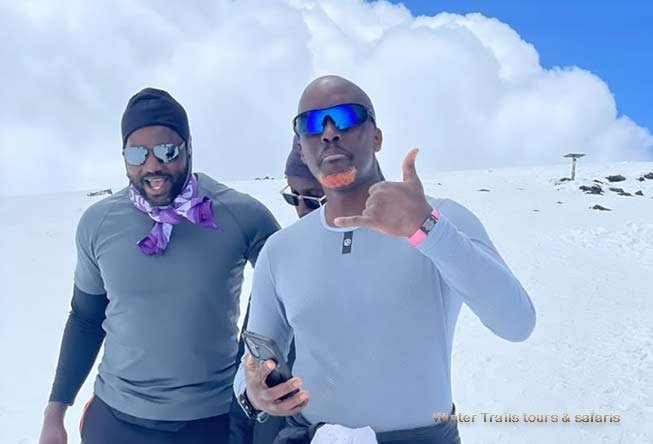
Summit night on Umbwe is the coldest, hardest part of the trek. Getting your layering right is the difference between reaching Uhuru Peak comfortably and turning back at Stella Point.
Here is the layering system we recommend:
Lower body:
- Base layer — merino or synthetic thermal leggings
- Mid layer — fleece or softshell trousers
- Outer layer — insulated or waterproof trousers
- Socks — thick wool or synthetic, plus a liner if your feet get cold easily
- Boots — properly laced but not tight, to keep circulation moving
Upper body:
- Base layer — merino or synthetic thermal top
- Mid layer — fleece
- Insulated layer — down jacket
- Outer layer — waterproof shell
- Buff or neck gaiter
- Warm hat under a hood if necessary
- Two pairs of gloves — liner plus insulated mittens
Hands and head:
- Keep your phone, camera batteries, and water bottle close to your body inside your layers. Anything exposed will freeze.
Accessories:
- Headlamp with fresh batteries
- Hand warmers (optional, but genuinely useful)
- Snacks in an accessible pocket
- Lip balm and sunscreen — even at night, you will want them at dawn
Dress slightly cool at the start. You will warm up within the first twenty minutes of climbing, and if you start too warm, you will sweat, and sweating is the enemy on summit night.
How to Pack Your Duffel and Daypack
Your duffel should be organised in dry bags or large ziplocks, by category. This makes life easier for you and easier for your porter, who has to carry it. Typical categories: sleeping gear, camp clothes, toiletries, spare layers.
Your daypack should be packed so that your most-used items are immediately accessible. Rain jacket and trousers at the top. Snacks in a side pocket. Water bottle or bladder close. Camera in an outer pocket or around your neck.
Weigh your bags before you leave Moshi. Your duffel should be at or under the weight limit for your trek (usually 15 kg). Your daypack should be 5–7 kg. If they are heavier, you have packed too much.
Final Thought on Packing for Umbwe
The Umbwe Route is the hardest standard route on Kilimanjaro, and the gear you choose is a genuine part of your success. Get the basics right — proper boots, real insulation, reliable waterproofing, working headlamp — and the rest of the trek becomes about you and the mountain. Get them wrong, and every day will be harder than it needs to be.
If you are unsure about any item, ask us. We would rather spend twenty minutes on an email helping you pack correctly than have you discover a gap in your gear on the mountain.