How Difficult is the Northern Circuit? A Complete Guide to Kilimanjaro's Longest Route
Introduction
The Northern Circuit is the longest and quietest route on Mount Kilimanjaro. It offers the highest summit success rate, the most varied scenery, and the fewest crowds. But how difficult is it really? Is it suitable for beginners, or do you need mountaineering experience?
In this blog, we'll break down exactly what makes the Northern Circuit challenging, how it compares to other routes, and what you need to know before you book.
The Short Answer
The Northern Circuit is rated moderate to challenging. It is not a technical climb — you won't need ropes, harnesses, or ice axes. However, it is physically demanding due to the altitude (5,895 m at the summit), the long daily hikes, and the cumulative fatigue of 8–10 days on the mountain.
The good news: the Northern Circuit's gradual ascent profile makes it more comfortable than shorter routes like Machame or Marangu. The extra days allow your body to acclimatise properly, which is why it has the highest summit success rate on Kilimanjaro — 95–98%.
What Makes the Northern Circuit Difficult?
1. Altitude
Altitude is the biggest challenge on any Kilimanjaro route. At 5,895 metres, the air contains roughly 40% less oxygen than at sea level. Your body needs time to adapt, and altitude sickness can affect anyone regardless of fitness.
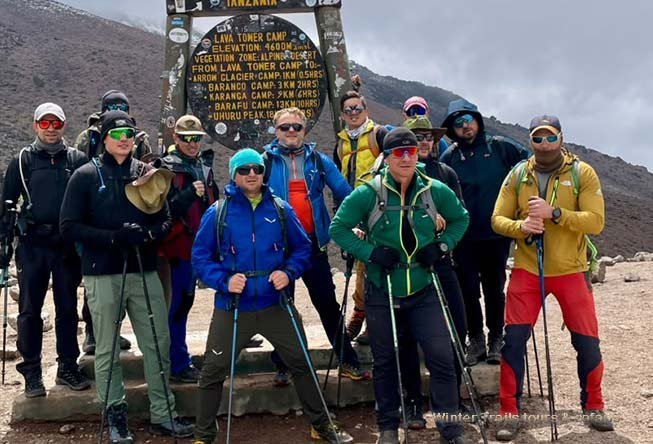
The Northern Circuit mitigates this better than any other route because it ascends slowly. You have more days to acclimatise, and the itinerary follows the "climb high, sleep low" principle — for example, you climb to Lava Tower (4,600 m) and then sleep at Moir Hut (4,200 m). This gives your body the best possible chance to adjust.
Difficulty rating: High, but manageable with proper acclimatisation.
2. Daily Hiking Hours
On the Northern Circuit, you'll hike 4–7 hours per day on most days, with one long summit night (12–15 hours). This is similar to other routes, but the shorter days mean you arrive at camp with energy to spare.
| Day Type | Hiking Time |
|---|---|
| Typical day | 3–6 hours |
| Longest day (excluding summit) | 6–7 hours |
| Summit night | 12–15 hours |
Difficulty rating: Moderate. The shorter daily hikes make the Northern Circuit more comfortable than routes like Machame, where days can be longer.
3. Terrain
The Northern Circuit covers a variety of terrain:
- Rainforest (Day 1) – muddy, root-covered trails
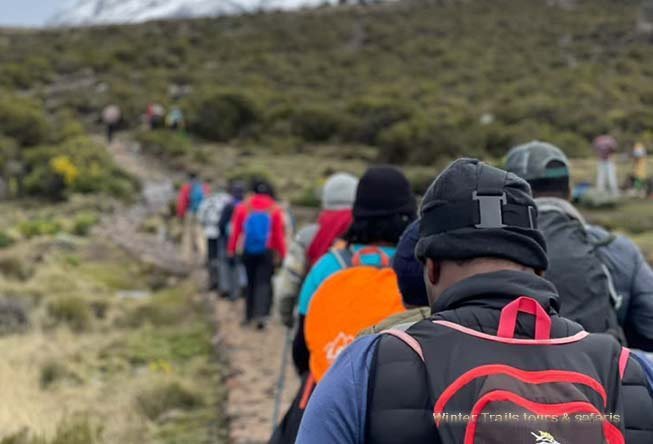
- Moorland (Days 2–3) – open, gradual slopes
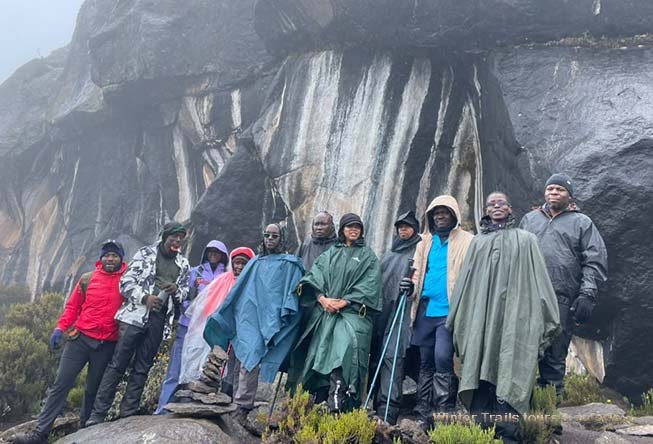
- Alpine desert (Days 4–7) – rocky, dusty, exposed
- Summit zone (Day 8) – loose scree, snow, ice
There are no technical sections, but the summit night involves a steep, switchback ascent on loose scree. Trekking poles are essential.
Difficulty rating: Moderate. The terrain is varied but never requires climbing skills.
4. Summit Night
Summit night is the hardest part of any Kilimanjaro climb. On the Northern Circuit, you'll start around midnight from School Hut (4,750 m) and climb to Uhuru Peak (5,895 m). The ascent takes 6–8 hours, often in freezing temperatures and strong winds. After summiting, you descend for another 4–6 hours to Mweka Camp.
This is physically and mentally exhausting. But because you've had more days to acclimatise, you're better prepared than climbers on shorter routes.
Difficulty rating: High. The summit night is the most challenging part of the trek.
5. Weather
Kilimanjaro's weather can change quickly. You may experience rain, snow, wind, and extreme cold — sometimes all in one day. The Northern Circuit is less crowded, but it's not immune to bad weather. Be prepared for wet conditions in the rainforest and freezing temperatures at the summit.
Difficulty rating: Moderate to high, depending on the season.
6. Length
The Northern Circuit is the longest route on Kilimanjaro. At 8–10 days, it requires a significant time commitment. The cumulative fatigue of consecutive days of hiking can wear you down, even if each day isn't extremely difficult.
Difficulty rating: Moderate. The length is a mental challenge as much as a physical one.
How Does It Compare to Other Routes?
| Route | Difficulty | Summit Success | Crowds |
|---|---|---|---|
| Northern Circuit | Moderate–Challenging | 95–98% | Very low |
| Lemosho | Moderate | 90–95% | Medium |
| Machame | Moderate–Hard | 85–90% | High |
| Marangu | Moderate | 55–65% | Very high |
| Rongai | Moderate | 75–85% | Low |
The Northern Circuit is less physically demanding than Machame (no Barranco Wall) and far more successful than Marangu. It's the best route for climbers who want a comfortable pace and the highest chance of summiting.
Photo Gallery